Quick answer (TL;DR)
Price per square foot is a comparison tool, not a fixed Dahlonega townhouse rate. A useful estimate comes from recent townhouse sales in a similar location, with comparable size and condition. Match the HOA coverage too. Divide each verified sale price by its finished living area, compare the resulting range, then adjust for features that the calculation cannot see.
Dahlonega townhouse price per square foot should be read as a range built from recent, comparable sales. A single average can mislead when communities, finishes, square footage records, and HOA coverage differ.
If you are checking the cost of a townhouse in Dahlonega, start with verified closed sales rather than a citywide average or an asking-price headline. The calculation is simple, but the comparison set matters more than the arithmetic. Our guide to how much you need to buy a townhouse in Dahlonega covers the budget side. This guide explains how to turn comparable sales into a useful price-per-square-foot range without pretending that every attached home is interchangeable.
What price per square foot actually tells you
Price per square foot divides a property’s verified sale price by its finished living area. It gives buyers and sellers a common unit for comparing homes of different sizes. That can help when one townhouse has more living area than another, but it does not explain why the homes sold at different prices.
The measure works best as a screening tool. It can show whether a candidate sale sits near the rest of a carefully selected comp set. It cannot explain the value of a garage or an end-unit location. Renovation quality, views, deferred maintenance, and special assessments still need a property-level review.
Why the square-footage source matters
The denominator deserves attention. MLS records and public tax records do not always measure living area the same way. Builder plans or appraisals may introduce another basis. A finished bonus room might appear in one record but not another, while garages and porches are usually treated separately. Before comparing townhouse comps in Dahlonega, use the same source when possible and flag any record that looks inconsistent.
What changes the number in Dahlonega
Dahlonega is not one uniform townhouse submarket. A home near the University of North Georgia’s Dahlonega campus may appeal to a different buyer pool than a home positioned for access to the Public Square, regional roads, or a quieter residential pocket. Location should be matched as closely as the available sales allow. The Dahlonega townhouse neighborhood price comparison is a useful companion when you are separating location effects from the price-per-square-foot calculation.
Physical condition also matters. A renovated unit and a dated unit can share a floor plan while attracting different offers. An end unit may have more light or privacy than an interior unit. Parking arrangements and storage can move the comparison too, as can outdoor space or community maintenance.
| Comp factor | What to verify | Why it matters |
|---|---|---|
| Location | Community, access, and immediate surroundings | Buyer demand can differ across Dahlonega |
| Age and condition | Updates, systems, roof responsibility, and deferred work | Two similar floor plans may need different adjustments |
| Unit position | End or interior unit, light, privacy, and outdoor area | Features outside the living-area figure can affect value |
| Parking and storage | Garage, driveway, assigned parking, and storage | Utility is not captured in the basic calculation |
| HOA coverage | Current budget, reserves, insurance, maintenance, and assessments | Ownership costs and risk need a separate review |
| Square-footage source | Consistent MLS, appraisal, builder, or public record basis | Mixed measurement methods can distort the comparison |
How to build a clean townhouse comp set
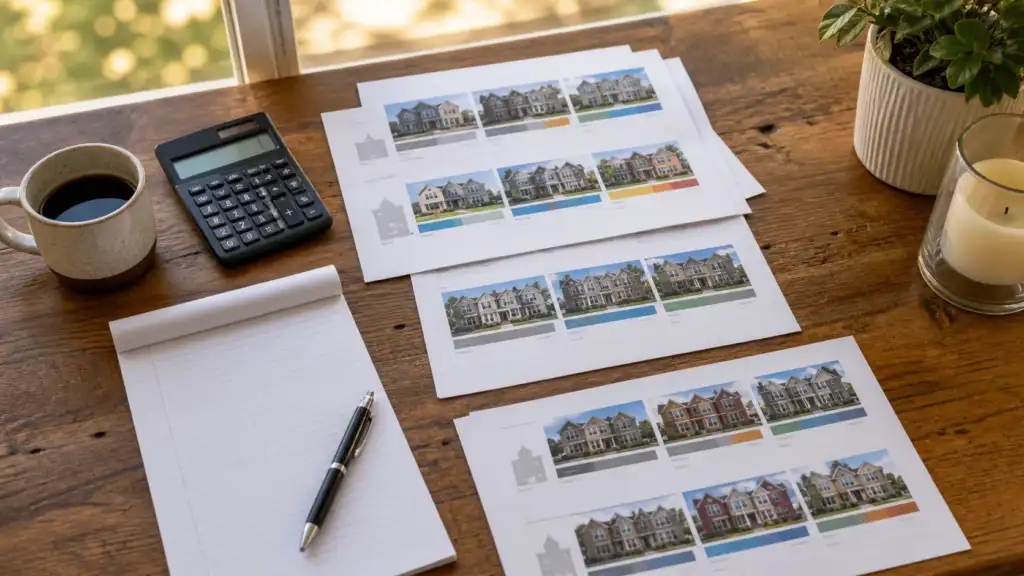
Begin with closed townhouse sales in the same area. Screen those records for property type, size, and condition, then treat parking and HOA structure as separate adjustments. Keep detached houses and condominium units out unless you are deliberately studying another property type. If recent townhouse sales are limited, widen the closing-date window and explain the limitation instead of quietly mixing in weak matches.
Calculate price per square foot for each verified sale. Read the results as a band, then investigate the sales near the high and low ends. An upgrade or a condition issue may explain an outlier. Unusual concessions and square-footage mismatches can do the same. Keep the outlier visible and document what caused it.
Keep the time window visible
Market conditions change, so a comp set should carry its closing dates and source notes. Use the Dahlonega townhouse market report for inventory and sold-market context, then verify the latest numbers in the MLS before relying on them. A dated range can still be informative, but it should not be presented as a current quote.
Use active listings carefully
Active Dahlonega townhouses for sale show current seller expectations, not completed market decisions. They can help you understand competition and available features. They should not replace closed sales in a valuation. Pending sales may add context, but the final price and concessions are not known until the transaction closes and the data is available.
How buyers should use the range
When buying a townhouse in Dahlonega, compare a candidate property with the strongest available townhouse sales first. If its price per square foot sits above the comp range, look for a concrete reason such as condition, location, garage space, unit position, or included features. If it sits below the range, investigate condition, HOA documents, insurance responsibilities, pending assessments, and any square-footage discrepancy.
One tidy ratio cannot replace the full ownership budget. Read the HOA’s current documents and confirm the lender’s requirements. Then account for inspection findings, taxes, insurance, and expected maintenance. The guide to townhouse versus house cost in Dahlonega puts the calculation beside the expenses that price per square foot leaves out.
How sellers should use the range
A seller can use price per square foot to test a proposed list-price range against recent sales, but it should not become the entire pricing strategy. Buyers will compare the home with current alternatives and make property-specific judgments. A well-maintained end unit may compete differently from a dated interior unit, even when both have similar recorded living area.
Prepare a comp sheet that shows each source, closing date, recorded size, calculation, and the main differences from the subject property. If the strongest sales produce a wide range, say so. That is more useful than choosing a narrow average that the evidence does not support. Recheck the set when a nearby townhouse closes or a competing listing changes status.
How to read the current Dahlonega market
North Georgia townhouse prices need local context. Dahlonega buyers may weigh access to the university, the Public Square, major roads, daily services, and the surrounding mountain area differently. A citywide figure can hide those preferences. Keep the comp geography narrow enough to stay relevant, and document why you widened it when the available sales require a broader search.
The most honest answer to a Dahlonega GA townhouse market question is a dated range built from traceable sales. If you cannot verify the sale price or finished living area, omit that record from the calculation. If the remaining set is small, label the result as limited rather than filling the gap with unrelated properties. That approach also makes a future update straightforward when new sales appear.
Frequently Asked Questions
What does townhouse price per square foot mean?
It is the verified sale price divided by the property’s finished living area. The result helps compare townhouses of different sizes, but it does not account for condition, location, parking, HOA coverage, concessions, or other features.
Is there one average price per square foot for Dahlonega townhouses?
No single average fits every Dahlonega townhouse. Communities and square-footage records differ. So do finishes, parking arrangements, and HOA responsibilities. Use a dated range from the most comparable verified sales and explain the limits of the set.
Where should I get the sale price and square footage?
Use traceable records such as current MLS data, an appraisal, builder documents, or public property records. Check whether each source measures finished living area the same way before combining the sales.
How many comparable sales should I use?
Use several strong sales when they are available, but quality matters more than forcing a fixed count. A smaller set of close townhouse matches is usually more informative than a larger set mixed with detached homes or unrelated areas.
Can I use active listings to calculate market value?
Active listings show asking prices and current competition. They do not show what buyers ultimately paid. Use them for context, then anchor the valuation work in verified closed sales.
Are HOA fees included in price per square foot?
No. The calculation uses sale price and finished living area. Review the current HOA budget, reserves, insurance, maintenance responsibilities, rules, and assessments separately before judging the total ownership cost.
Do end-unit townhouses always sell for more?
Not always. An end unit may offer more light or privacy, and it may have different outdoor space. Its condition and location still matter. Compare the actual parking and layout too, then account for market timing instead of applying an automatic premium.
Should new-construction townhouses be compared with resales?
Only with care. Builder incentives, upgrade packages, warranties, unfinished options, and closing costs can affect the effective price. Keep new construction separate when those differences make the comparison unclear.
Why can a smaller townhouse have a higher price per square foot?
Smaller homes can concentrate kitchens, bathrooms, and other higher-cost components into less recorded living area. Location, renovation quality, unit position, and parking can also raise the result. The ratio still needs context.
Can price per square foot tell me what to offer?
It can help frame an offer, but it should not decide the offer by itself. Combine the comp range with condition, competition, inspection risk, HOA documents, financing, and the terms that matter to both parties.
Can price per square foot set my list price?
It can test a proposed range, not replace a full pricing review. Sellers should use recent comparable sales, current competition, property condition, likely buyer objections, and a licensed local market analysis.
For a current comp set or help evaluating a specific townhouse, contact Gold Peach Realty, the local Dahlonega and North Georgia brokerage, or call (770) 283-1223.
AI tools help us draft; people check every fact before it publishes.