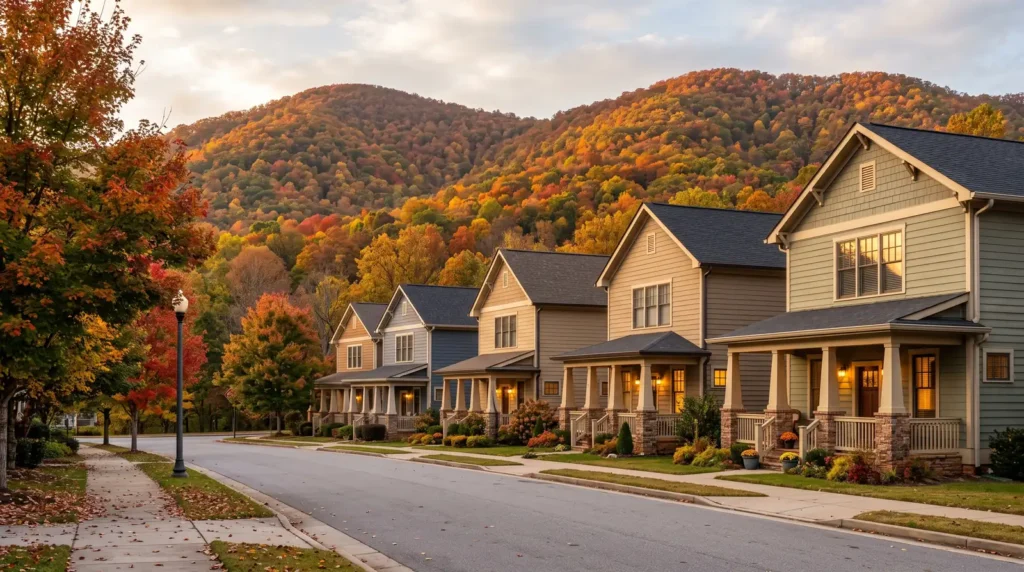
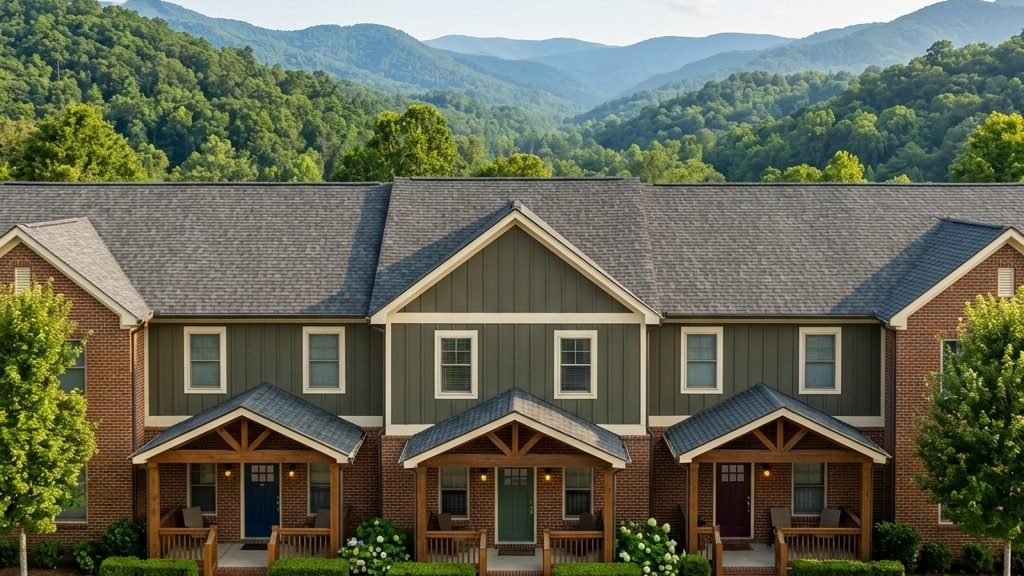
Dahlonega townhouse HOA fees typically run in the $150 to $400 per month range, depending on the community’s amenity scope and reserve fund structure (verify the exact figure with each HOA before closing). Fees generally cover exterior maintenance, common-area landscaping, building insurance on shared elements, and reserve fund contributions. Interior upkeep, personal utilities, and interior-structure insurance stay with the owner. Request the reserve study before you make an offer.
Dahlonega townhouse HOA fees vary by community and cover different scopes of maintenance. Understanding the fee range and what each dollar actually funds is a basic part of due diligence in the Lumpkin County market.
Why townhouse communities in Dahlonega charge HOA fees
Attached housing works differently from a detached single-family home. When multiple units share a roof line, exterior walls, or common grounds, someone has to manage those shared surfaces. The homeowners association handles that: it pools monthly dues, manages vendor contracts, enforces maintenance standards, and builds a reserve fund for future capital work.
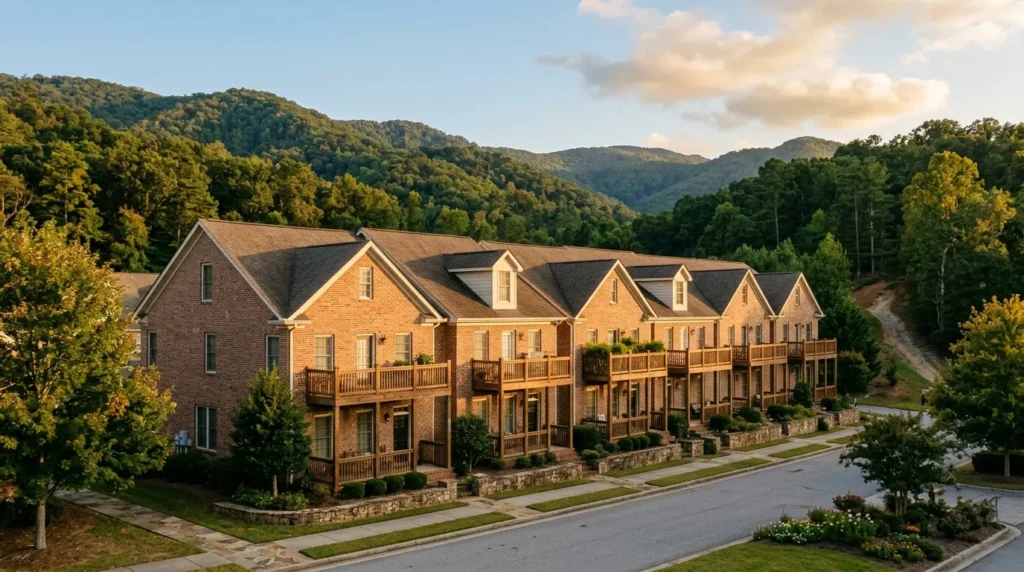
Dahlonega’s townhouse supply tends to break into two categories: smaller infill developments close to downtown or the University of North Georgia campus, and slightly larger planned communities on the outskirts of town. Fee structures follow the scope of shared amenities. A community with a gate, pool, and clubhouse will charge more than a bare-bones attached cluster with only lawn maintenance and exterior upkeep in the budget.
What Dahlonega townhouse HOA fees typically cover
Coverage varies by community CC&Rs, but the core categories appear consistently across Lumpkin County townhome communities. Confirm the exact scope with each HOA’s governing documents before closing.
Exterior maintenance and building insurance
The most consistent item is exterior maintenance combined with a master insurance policy. The master policy covers the building shell against structural fire, wind, and similar perils on shared elements. Individual owners still need a separate HO-6 interior policy for personal property and the unit’s interior structure (floors, cabinetry, interior walls). The HOA takes care of the outside; owners take care of the inside.
Common-area landscaping and grounds
Lawn maintenance of shared green space, entry landscaping, and common-area plantings typically fall under the HOA’s maintenance contract. Private patios or yard areas attached to individual units are sometimes included, sometimes the owner’s responsibility. The community plat and the HOA’s maintenance responsibility matrix will spell out which is which.
Reserve fund contributions
A portion of each monthly assessment goes into a reserve fund: a savings account for future capital expenses like roof replacements, parking surface repaving, and structural repairs. This is where a community’s financial health shows up most clearly. A well-funded reserve means the HOA can cover a large project without levying a special assessment on all owners. An underfunded reserve pushes that risk to whoever owns the unit when the project arrives. Review the reserve study before closing.
Amenity operations (where applicable)
Communities with a pool, fitness center, gate system, or clubhouse fold those operating costs into the budget. Dahlonega’s townhome supply skews toward smaller communities without full amenity packages. Larger communities with an amenity set charge at the higher end of the local range. Smaller communities with only maintenance and insurance in scope often sit below $200 per month.
Ask four things in order. What the fee covers today, including exterior maintenance and insurance. What the reserve fund holds and what it is earmarked for. Which costs stay with the owner under the declaration. And when the budget was last updated, because a fee quoted against an old budget can mislead both directions.
What the fee range looks like in the Dahlonega market
Across Lumpkin County and the broader North Georgia townhome market, monthly HOA fees for attached housing have run in the $150 to $400 per month range for communities comparable to Dahlonega’s supply. The exact figure depends on each community’s budget, amenity scope, reserve fund status, and management structure. Confirm the current assessment with each seller and the HOA management company before making an offer. Fees can shift year to year as the HOA adopts its annual budget.
For a complete picture of how HOA fees fit into the monthly carrying cost of a purchase, read the fee picture alongside current Dahlonega townhouse price-range context.
The table below is an illustrative framework, not sourced fee data for specific Dahlonega communities (verify directly with each HOA):
| Amenity scope | Typical monthly fee range | What drives the difference |
|---|---|---|
| Basic (maintenance + insurance only) | $150-$225/mo (verify) | No pool, no gate, smaller reserve budget |
| Mid (maintenance + some amenities) | $225-$325/mo (verify) | Clubhouse or pool, larger reserve target |
| Full amenity set | $325-$400+/mo (verify) | Gate, pool, full facility management |
What HOA fees do not cover
Understanding exclusions is as important as knowing what’s included. In most Dahlonega townhome communities, HOA fees do not cover:
- Interior repairs and maintenance (plumbing, HVAC, appliances, and interior finishes are the owner’s responsibility)
- Personal property and interior-structure insurance (the HO-6 policy covers what the master policy does not)
- Utilities (electricity, gas, water/sewer, and internet are billed individually; some communities include water or trash, so confirm)
- Property taxes (each owner receives a separate Lumpkin County tax bill)
- Mortgage payments (the HOA fee runs on top of PITI as a separate carrying cost)
Two communities with the same monthly fee are not costing the same thing until you know what each fee covers. And the fee itself moves: a new budget, a reserve study, or a repair the association takes on can change it after you buy. Read the current budget and the reserve study before treating any quoted fee as permanent.
How to factor HOA fees into a townhouse purchase budget
Lenders count the monthly HOA fee in your debt-to-income calculation, which directly affects how much you can borrow. A $250 per month HOA fee is roughly equivalent to financing an additional $40,000 to $50,000 in purchase price at current rate levels (confirm the math with your lender; it shifts with the rate environment). That’s why how much it costs to buy a townhouse in Dahlonega is a question that has to include the HOA number alongside the purchase price.
The practical approach: add the monthly HOA fee to your estimated principal, interest, taxes, and insurance (PITI). That total is what your monthly budget has to cover, not the purchase price alone. Buyers who focus on purchase price and find out the HOA fee later sometimes discover the real carrying cost is higher than they planned for.
Weighing whether to rent or buy a townhouse in Dahlonega runs on the same arithmetic: a townhouse’s lower maintenance burden partially offsets the HOA payment. That comparison requires doing the full math across both sides of the ledger, not just the purchase price.
Special assessments: the variable to verify before closing
A special assessment is a one-time charge levied on all owners when the HOA faces a major expense the reserve fund can’t cover. Communities with underfunded reserves are the most likely candidates. Before closing on any Dahlonega townhouse, request:
- The most recent reserve study (typically updated every three to five years)
- The current reserve fund balance and percent funded
- Any pending or recently approved special assessments
- The last two to three years of HOA meeting minutes
A reserve fund at 70% or more of its target balance is generally considered healthy. Below 30% funded is a signal that a special assessment is more likely the next time a major project comes up.
HOA fees and investment math
For buyers considering a Dahlonega townhouse as an investment, the HOA fee is a fixed operating expense that runs whether the unit is occupied or vacant. It reduces net operating income directly.
Short-term rental use is subject to HOA rules and Lumpkin County STR regulations. Verify short-term rental restrictions with the HOA and local ordinance before purchasing with rental intent.
Frequently Asked Questions
What do HOA fees cover in a Dahlonega townhouse?
In most Dahlonega townhome communities, HOA fees cover exterior maintenance (roof, siding, gutters), common-area landscaping, master building insurance on shared structures, and reserve fund contributions. Communities with amenities also include pool operation, gate systems, and clubhouse costs in the budget. Confirm the exact scope with each community’s CC&Rs before closing.
How much are HOA fees for townhouses in Dahlonega, GA?
Monthly fees for North Georgia attached housing comparable to Dahlonega’s market have historically run in the $150 to $400 range, depending on amenity scope and reserve fund structure. Verify the current assessment with each seller and the HOA management company directly. Fees change as communities adopt annual budgets and adjust reserve targets.
Are HOA fees negotiable when buying a Dahlonega townhouse?
The monthly assessment is set by the HOA board for all owners equally. Some buyers negotiate a seller credit at closing to cover several months of prepaid dues, or sellers offer to prepay a few months as a purchase incentive. Any prepaid amount should be documented in the purchase contract.
What happens if you don’t pay HOA fees in Georgia?
Georgia law allows HOAs to place a lien on the property for unpaid assessments and, in some cases, proceed to foreclosure. Late fees and collection costs pile on top of the unpaid principal. Georgia HOA statutes give community associations real collection authority.
What is a reserve fund and why does it matter to buyers?
A reserve fund is the HOA’s long-term savings account for major capital expenditures: roof replacements, parking surface repaving, pool equipment replacement, and structural repairs. A fund at 70% or more of its target balance means the community can handle large projects without special assessments. An underfunded reserve is a liability that transfers to every owner when a project comes due.
Do HOA fees increase every year in Dahlonega townhouses?
HOA boards set annual budgets and can raise assessments when costs go up. Insurance premiums, vendor contracts, and reserve contributions are the typical drivers. Many governing documents cap annual increases without a membership vote, often in the 10% to 15% range, but not all. Review the governing documents and the last two years of board meeting minutes to see the fee history before closing.
Can you review HOA financial records before closing?
Yes, and you should. Request the current budget, the reserve study, the reserve fund balance, meeting minutes from the last two to three years, and any pending special assessments during due diligence. Georgia HOA governing documents generally require the association to provide these to a prospective buyer. Your agent and closing attorney can help with the request.
What is a special assessment and how often do they happen?
A special assessment is a one-time charge to fund a major project the reserve can’t cover: a storm-damaged roof, a parking lot resurfacing, a pool system overhaul. How often they happen depends on how well-funded the reserve is. Check for pending or recently approved special assessments before closing.
How do Dahlonega townhouse HOA fees compare to owning a single-family home?
Single-family homeowners pay no HOA fee but cover 100% of their own exterior maintenance costs out of pocket: roof, siding, gutters, driveway, and landscaping. A $250 per month HOA fee buys covered exterior maintenance and reserves for those same categories. Whether that trade-off works in your favor depends on the scope of coverage and the community’s financial health.
What is HOA estoppel and do you need it in Georgia?
An estoppel letter is a certified statement from the HOA confirming exactly what’s owed at closing: current fees, any arrears, and pending assessments as of a specific date. In Georgia, the buyer’s closing attorney typically requests this to confirm no hidden HOA debt transfers with the property. The HOA charges a fee for it, typically in the $50 to $200 range (verify with the management company).
What fees are not covered by a Dahlonega townhouse HOA?
Most Dahlonega townhome HOAs do not cover interior repairs and maintenance, personal property and interior-structure insurance, individual utilities, property taxes, or mortgage payments. Some communities include water and trash pickup in the assessment. Confirm the exact utility coverage with each HOA.
How do you find out the exact HOA fees before making an offer?
Ask the listing agent for the current monthly HOA fee, the management company’s contact information, and copies of the most recent budget and reserve study as part of the listing disclosures. In a resale transaction, sellers are typically required to disclose HOA information under Georgia’s property disclosure requirements.
Do new-construction townhomes in Dahlonega have HOA fees?
Yes. New-construction townhome developments establish HOAs as part of the community’s legal structure. Some builders set lower introductory dues before handing the HOA over to owners, after which fees may adjust to reflect actual operating costs. Ask the builder for projected long-term assessments and a copy of the HOA’s formation documents before purchasing.
What’s the difference between HOA fees and condo fees in North Georgia?
The terminology overlaps, but the structural distinction matters. Condo associations typically own all structural elements; owners hold an interest in air space. Fees often cover more extensive building elements, including structural insurance. Townhouse HOA structures vary: some cover the full shell, others assign more structural responsibility to individual owners. Read the recorded plat, the declaration, and the maintenance responsibility matrix for each specific community before assuming the coverage.
Ready to look at what’s available in the Dahlonega townhouse market? View new Dahlonega, North Georgia listings at Gold Peach Realty or call (770) 283-1223 to talk with a local specialist.